
How Online Counselling Works in Australia — Privacy, Fit, and What to Expect
Published by Halo Journey Australia | July 2026
Online counselling has become one of the most significant shifts in how mental health support is delivered in Australia. Whether you're weighing it up for the first time or you've tried it and weren't sure what to make of it, this article covers how it actually works, what the research says about its effectiveness, and how to know whether it's the right fit for you.
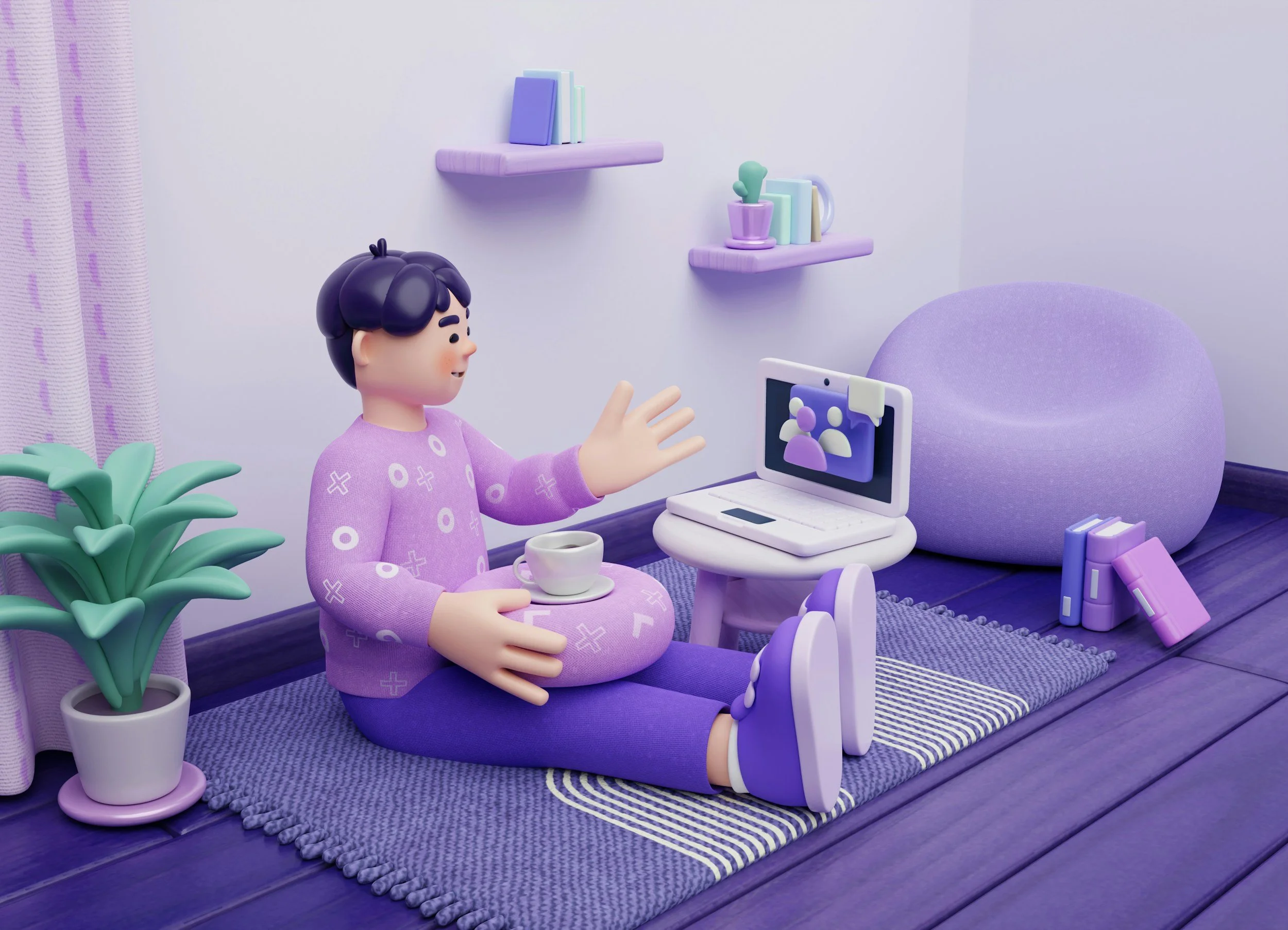
“The single biggest factor in whether counselling works for you isn't the modality, the platform, or even the practitioner's qualifications — it's whether you feel genuinely comfortable with the person you're working with.”
What Online Counselling Actually Looks Like
At its most basic, online counselling is a scheduled session with a qualified counsellor or psychotherapist conducted via video call rather than in person. In Australia, most practitioners use secure, purpose-built clinical platforms (like Zanda Health) rather than general consumer apps — these are designed with healthcare privacy requirements in mind.
The process typically looks like this:
You make an enquiry and are matched with a suitable practitioner
You complete an intake form covering your background, goals, and any relevant history
You pay before your session and receive a secure video link
Your session runs for a standard hour, one-on-one with your practitioner
Follow-up sessions are scheduled from there, at a pace that works for you
That's it. No commute, no waiting room, no parking.
Does Online Counselling Actually Work? What the Research Says
This is the question that matters most, and the evidence is now quite clear.
Therapeutic outcomes are comparable to in-person therapy. A meta-analysis by Fernandez et al. (2021) found that live psychotherapy delivered by video is not only a popular and convenient choice, but an effective one now upheld by strong evidence. Clinically, therapy is no less effective when delivered via videoconferencing than in person.
It’s been proven to improve mental health with the same efficacy as in person therapy. A systematic review by Berryhill et al. (2019) found that videoconferencing psychotherapy and counselling for the treatment of depression is a promising method for delivering mental health services, with results supporting its use as a legitimate treatment pathway rather than a compromise option. A 2025 systematic review by Ibrahim et al. found that telemedicine demonstrated non-inferior efficacy to in-person therapy across diverse modalities for anxiety disorders, and actually outperformed self-help programs. Patient satisfaction and adherence were high, and telehealth groups showed longer retention — meaning people were more likely to stick with their treatment.
Telemental health increases access to care. A comprehensive review by Hilty et al. (2013) concluded that telemental health is both effective and meaningfully increases access to care — particularly for populations who face geographic, logistical, or systemic barriers to attending in-person services.
The therapeutic relationship forms just as strongly online. One of the most consistent predictors of positive outcomes in therapy is the quality of the relationship between client and practitioner — the therapeutic alliance. A systematic review and meta-analysis by Seuling et al. (2024) found no statistically significant difference in therapeutic alliance between telehealth and in-person therapy, based on ratings from both patients and therapists. Rapport, trust, and the sense of being genuinely understood do not require physical proximity.
The Benefits of Doing Counselling Online vs. In Person
Beyond the clinical evidence, there are practical advantages to online delivery that are worth naming clearly.
Flexibility. Evening and weekend appointments become genuinely viable when there's no travel involved. Many people find that sessions can fit around work, childcare, or other commitments in ways that in-person appointments simply can't.
Consistency. One of the strongest predictors of good outcomes in counselling is regularity — attending sessions week after week, even when life gets busy. The lower logistical burden of online sessions tends to support better consistency.
Geographic access. If you live in a regional or remote area, are interstate from your preferred practitioner, or simply can't find a local provider with relevant expertise (in LGBTQIA+ affirming care, for example, or trauma-focused modalities), online counselling significantly widens your options.
Comfort. Many clients — particularly those new to therapy — find it easier to begin the process from their own home. The physical environment of a clinical room, while designed to be calming, can feel unfamiliar or exposing. Being in your own space can make the sessions feel more manageable.
Privacy in a different sense. For people in small communities, regional towns, or workplaces where confidentiality feels fragile, not being seen entering a counselling clinic can itself be a relief.
Who Online Counselling Tends to Suit Best
Online counselling works well across a wide range of presentations and life situations. It tends to be a particularly good fit if:
You have a demanding or irregular schedule and need flexibility around appointment times
You live in a regional, rural, or remote area with limited local services
You have a specific need (e.g. LGBTQIA+ affirming care, specialist trauma support) that's hard to find locally
You experience anxiety, social anxiety, or agoraphobia that makes travelling to appointments difficult
You've previously had a good experience with a specific practitioner and want to continue working with them across a move or relocation
A Note on When Online Counselling May Not Be Enough
In the interests of honesty: online counselling isn't the right fit for every situation.
If you are experiencing an acute mental health crisis, active suicidal ideation, or symptoms that require urgent psychiatric assessment or medication review, the first port of call should be your GP, a mental health crisis line (like Lifeline on 13 11 14), or an emergency service.
Online counselling is most effective for mild to moderate presentations — anxiety, depression, relationship difficulties, life transitions, grief, communication and conflict, and personal development goals. A qualified practitioner will always tell you if they think a different level of care is needed, and help you access it.
Privacy and Confidentiality
Confidentiality in counselling is a legal and ethical obligation, not just a courtesy. Practitioners are bound by the codes of conduct of their professional registration bodies (such as PACFA and ACA) to maintain client privacy with very limited exceptions — primarily when there is a mandatory reportable risk.
For online sessions specifically, the platform matters. Reputable practitioners use clinical-grade platforms that are purpose-built for healthcare, store data in compliance with Australian privacy law, and do not use client data for any purpose beyond service delivery.
How to Find the Right Fit
The single biggest factor in whether counselling works for you isn't the modality, the platform, or even the practitioner's qualifications — it's whether you feel genuinely comfortable with the person you're working with.
Most practitioners offer a brief initial conversation before committing to ongoing sessions. Use it. Ask about their approach, what they're trained in, and whether they have experience with what you're bringing to sessions. It's entirely appropriate to try more than one practitioner before deciding who to work with.
Things to look for: relevant qualifications, current registration with a professional body, insurance, and a clear explanation of their approach to therapy. Things to trust: your own gut response to how they communicate with you.
What to Expect in a First Session
First sessions are typically about context-gathering rather than deep therapeutic work. Your practitioner will want to understand what's brought you to counselling, a bit about your background and current circumstances, and what you're hoping to get from the process.
You don't need to have it all figured out before you arrive. You don't need to have the "right" presenting problem. You don't need to have tried everything else first.
The first session is a conversation. Come as you are.
Ready to Learn More?
If you're considering online counselling and want to talk through whether it might be right for you — or to find out more about how sessions work at Halo Journey Australia — we're happy to have that conversation with no obligation.
📞 Call or Text: 0485 042 221
📧 info@halojourney.com.au
🌐 Book Now
References
Berryhill, M.B. et al. (2019) 'Videoconferencing psychotherapy and depression: A systematic review', Telemedicine and e-Health, 25(6), pp. 435–446. https://doi.org/10.1089/tmj.2018.0058
Fernandez, E., Woldgabreal, Y., Day, A., Pham, T., Gleich, B., & Aboujaoude, E. (2021). Live psychotherapy by video versus in-person: A meta-analysis of efficacy and its relationship to types and targets of treatment. Clinical Psychology & Psychotherapy, 28(6), 1535–1549. https://doi.org/10.1002/cpp.2594
Hilty, D.M. et al. (2013) 'The effectiveness of Telemental Health: A 2013 review', Telemedicine and e-Health, 19(6), pp. 444–454. https://doi.org/10.1089/tmj.2013.0075
Ibrahim, M.E., M Osman, H.M., Mubarak Osman, A.M.E., Mofareh Alanazi, N.M., Mohamed Ali, B.T., Adam Abdallah, I.I., & Hussein Mohamed, M.I. (2025). Comparing telemedicine and in-person psychological interventions for anxiety: A systematic review. Cureus, 17(8), e89594. https://doi.org/10.7759/cureus.89594
Seuling, P.D., Fendel, J.C., Spille, L., Göritz, A.S., & Schmidt, S. (2024). Therapeutic alliance in videoconferencing psychotherapy compared to psychotherapy in person: A systematic review and meta-analysis. Journal of Telemedicine and Telecare, 30(10), 1521–1531. https://doi.org/10.1177/1357633X231161774
Halo Journey Australia Pty Ltd acknowledges the Traditional Owners of Country throughout Australia and pays respect to Elders past and present.
© Halo Journey Australia Pty Ltd, 2026
