
Neighbour Dispute Mediation — Online, Anywhere in Australia

You can leave a job. You can dodge a difficult relative at Christmas. But you cannot leave your own home.
That's what makes a neighbour dispute so uniquely exhausting. It's there when you back the car out. It's there when you hang the washing. It's there when you open the blinds and immediately wish you hadn't. Our neighbour dispute mediation service gives you a calm, structured, confidential place to sort it out — online, wherever you are in Australia, with an AMDRAS accredited mediator, no waitlists, and appointments seven days a week from 6am to 10pm.
You don't need to have "a case". You just need to want your peace back.
Almost every person who contacts us about a neighbour dispute says some version of the same thing: "I know this sounds ridiculous, but…"
Then they describe not sleeping properly for eight months.
No, you're not being petty
Here's the thing. The subject of a neighbour dispute is often genuinely a bit absurd — a fence panel, a wheelie bin, a dog with strong opinions about the postie, a tree that has apparently decided your gutters are its personal retirement plan. We're allowed to smile at that. What isn't absurd is the effect. People stop using their own backyard. They avoid their own front door. They plan their day around when the neighbour leaves the house. Some seriously consider selling up and moving — which is a very expensive way to solve a conversation.
If it's costing you sleep, it isn't petty. And feeling petty is exactly why most people wait years before getting help, by which point the original issue has been buried under three more.
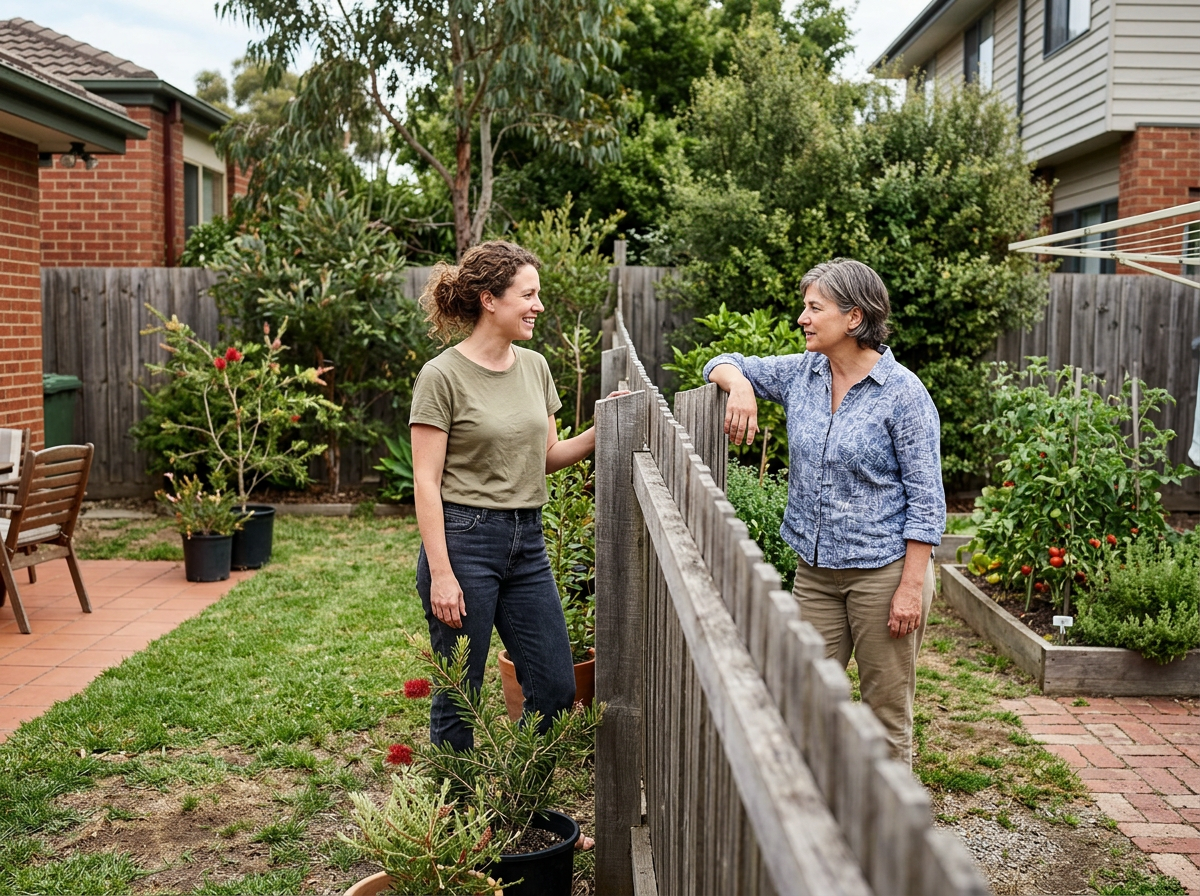
Mediation is a conversation with structure and a referee who has no stake in the outcome.
Your mediator is an AMDRAS accredited mediator. They are impartial. They are not on your side, and they are not on your neighbour's side — they are on the side of the conversation actually going somewhere.
Crucially: the mediator does not decide anything. Mediation is not arbitration and it is not a hearing. Nobody hands down a ruling. There's no judgement, no finding, no winner. You and your neighbour work out what you can both live with, and the mediator makes sure the process stays fair, calm and on track.
How the process runs
You get in touch. Tell us what's going on. We'll talk through whether mediation suits your situation — honestly, including if we think it doesn't.
Two separate private intake sessions. One for each party, held separately and confidentially. This is where you say the things you'd never say in the same room, and work out what you actually need (which is often not the thing you've been arguing about).
One joint mediation session, approximately 3 hours. Online, structured, with your mediator guiding it. Breaks included.
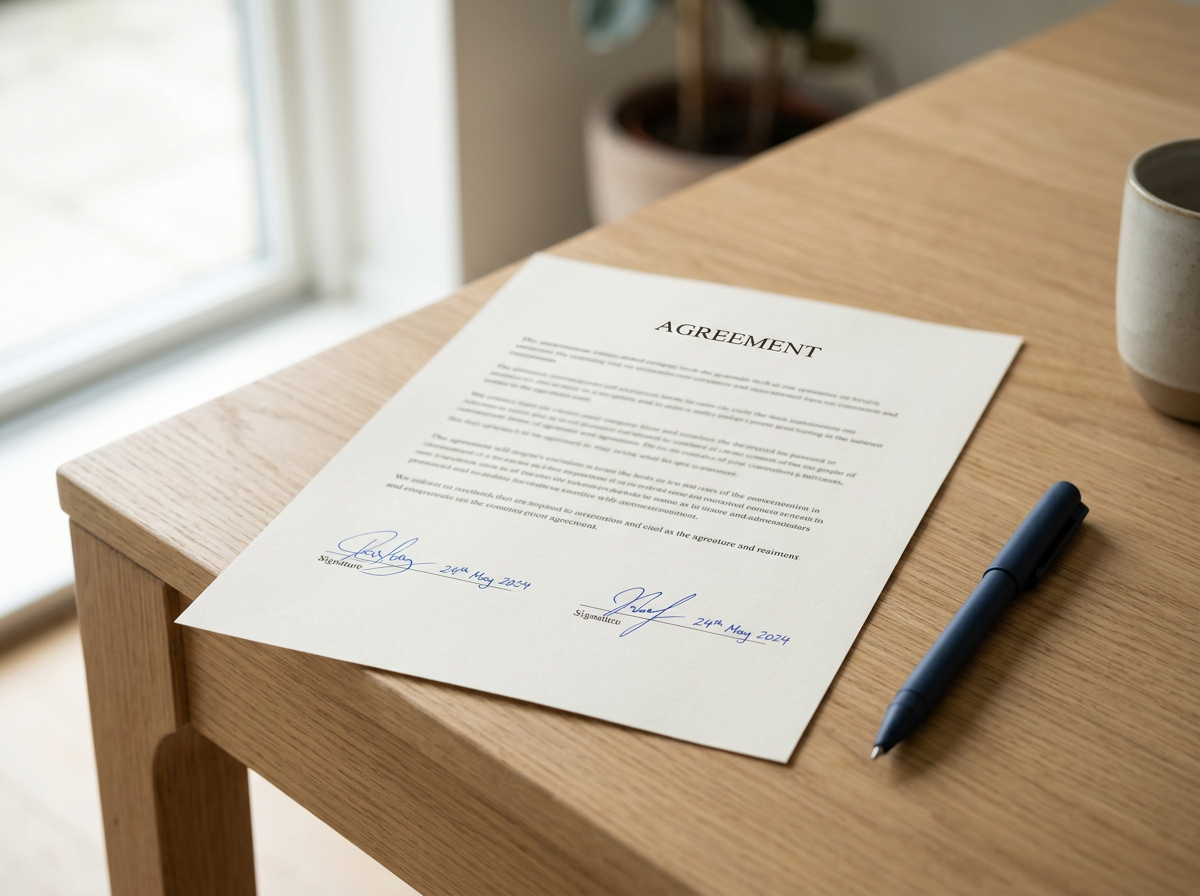
A practical way forward. If you reach agreement, it gets written down clearly and signed by both parties so everyone remembers it the same way in six months. That is, genuinely, most of the value.
What neighbour dispute resolution actually looks like
Every kind of neighbour dispute — fence, tree, noise, driveway and the rest
If it happens over a boundary line, we've probably mediated it.
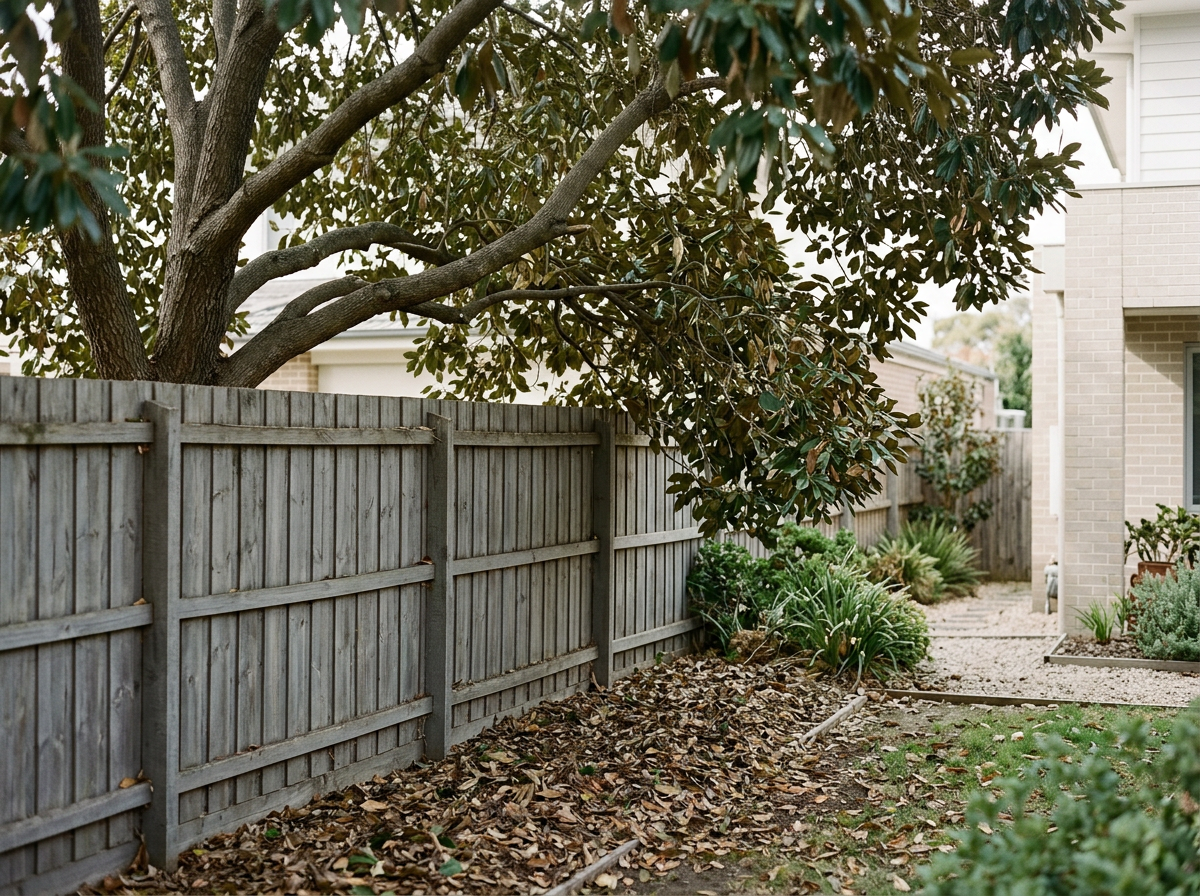
Fences and boundaries — a fence dispute is the classic, and it's rarely only about the fence
Trees — overhanging branches, invasive roots, leaf litter, blocked light or views
Noise — parties, music, barking dogs, 6am power tools, renovations that never end
Pets — barking, roaming, mess, animals in gardens
Shared driveways, access, parking and blocked access-ways
Bins, rubbish, hoarding and yard upkeep
Renovations and building work — dust, damage, disruption
Water, drainage and runoff between properties
Smoke and smells— BBQs, wood fires, burn-offs
Short-stay rentals and a rotating cast of weekend occupants
Strata, unit and apartment neighbour conflict
Long-running disputes where nobody can remember what actually started it
Community and neighbourhood group conflictmore broadly
A note on boundary disputes and fencing: we don't give legal advice. Fencing law, tree law, boundary and property law differ from state to state, and we won't pretend otherwise. If you need to know your legal position or where the boundary legally sits, that's a question for your local council, your state tribunal, a licensed surveyor, or your own solicitor. What we can do is help you and your neighbour have the conversation that means you may never need any of them.
"But I still have to live next door tomorrow"
This is the real fear, and it deserves a proper answer rather than a slogan.
A tribunal can rule on a fence. A court can make an order about a tree. Neither of them can make Tuesday morning less awkward. Neither of them is standing there with you at the letterbox afterwards, or at the shared driveway, or in the lift. You are. Every single day, indefinitely.
That's the argument for mediation that a law firm's website will never make. Formal processes are built to determine who is right. They are not built to leave two people able to nod at each other over the fence for the next fifteen years. Even when you win, you often lose the street.
Mediation is the only process here that treats the ongoing relationship as part of the problem to be solved. It doesn't require you to become friends. It doesn't require anyone to grovel or admit they were monstrous. Most agreements we see are wonderfully unsentimental: bins go back before 6pm, the dog comes in at 10, we text before the next lot of building work, we both stop mentioning 2023. Modest, specific and liveable. That's a win.
And on "won't it make things worse?" — a structured, mediated conversation with an impartial professional is a very different thing from another driveway confrontation or another letter. The mediator's whole job is to keep it from escalating. You'll each have had a private intake session first, so nobody walks in cold. And it's confidential, which means neither of you has to perform for an audience.
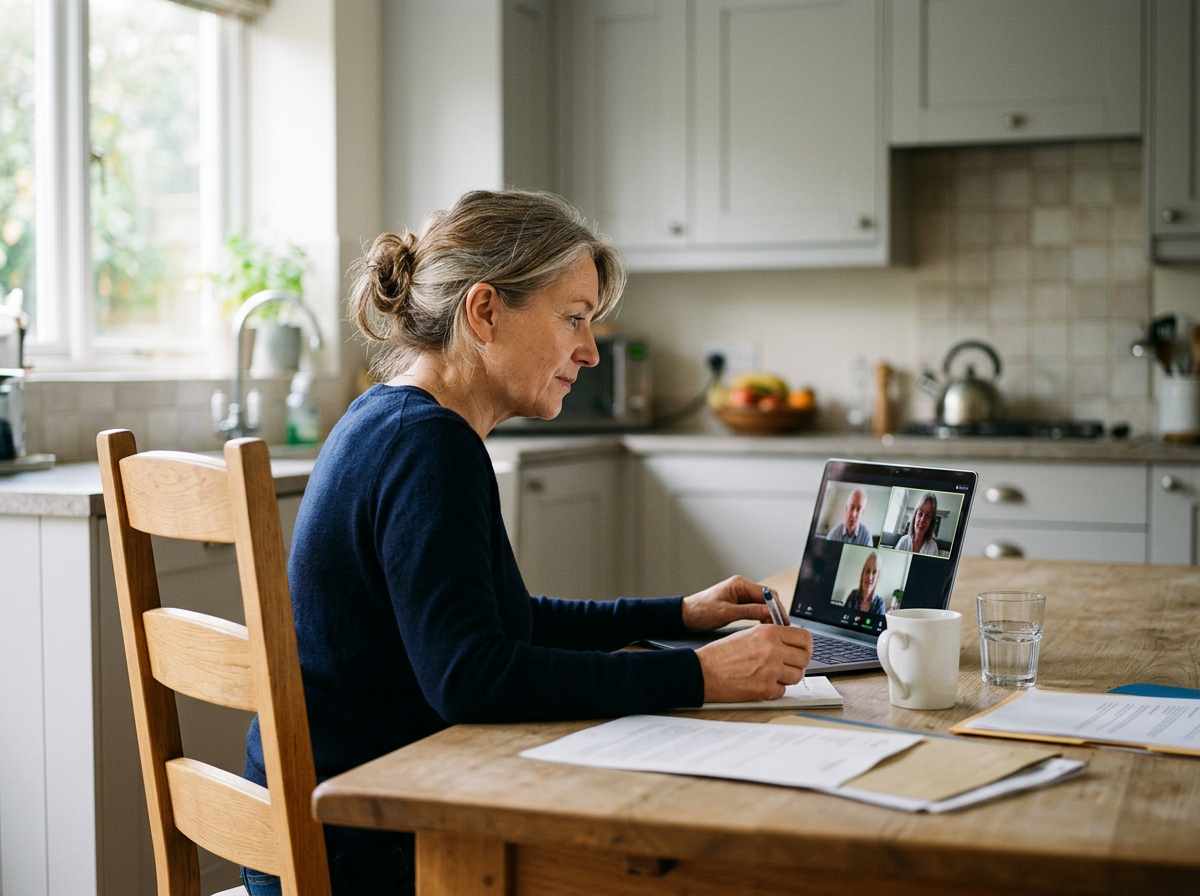
Why online mediation works especially well between neighbours
-
…with the person they've been avoiding for a year. You also don't arrive in the same car park, or leave at the same time.
-
…which, given the dispute is about your homes, is quietly useful.
-
This matters even more if you're rural, remote, or one of you has since moved away.
-
The whole street doesn't watch you both walk into the local community centre.
-
…because "we can see you in four months" is not a useful answer when it's about tonight's noise.
"My neighbour will never agree to this"
Honest answer: mediation is voluntary, and we can't make anyone participate. If your neighbour says no, that's their right and there's no getting around it.
What we can tell you is that "they'll never agree" is a prediction people make far more often than it turns out to be true. A neutral, non-legal, no-blame invitation lands very differently from a solicitor's letter — which reads as an escalation and often produces one. Plenty of neighbours are just as worn down as you are and just as unsure how to climb out of it. Some are quietly relieved someone else made the first move.
A few things that help:
Frame it as fixing the situation, not fixing them
Make it clear nobody is being judged, and no one decides anything but the two of you
Mention it's confidential, and online, so it's low-exposure for everyone
Let it be their choice — pressure tends to produce a no
Talk to us before you raise it. We can help you think through how and when to ask, and what to do if the answer is no.
Sometimes, yes. We'd rather tell you that than take your money.
If you need a legal determination, a formal order, an enforcement outcome, a survey, or advice on your rights, mediation isn't the tool. Your council, your state tribunal, a licensed surveyor or your own solicitor is where that belongs. We work with councils, community centres and community organisations, and councils sometimes refer neighbour disputes to mediation — but we don't act on any council's authority, we don't run council processes, and we don't represent anyone at any tribunal.
What we'd gently point out is that formal routes tend to be slower, generally more expensive, and completely uninterested in whether you and your neighbour can coexist afterwards. We can't promise you an outcome or a saving — nobody honestly can. We can promise a fair, professional process and a straight answer about whether it's likely to help.
Many people do both, in order: try mediation first, keep the other options in their back pocket. Mediation doesn't take anything off the table.
Should you just go to the council, a lawyer, or the tribunal?
Some neighbour situations involve harassment, intimidation, threats, stalking or violence. Mediation is not appropriate for those, and we won't pretend it is.
If you feel unsafe, or you're being threatened, that's a matter for the police. There are legal protections available to you, and the right people to talk to are the police and a solicitor — not a mediator. Please don't try to negotiate your way out of a safety issue.
We take this seriously at intake. If we don't think mediation is the right or safe process for your situation, we'll tell you honestly and point you towards what is. That's not us turning you away. That's us not wasting your time or putting you in a room you shouldn't be in.
If you feel unsafe, mediation isn't the right process
Then you're in extremely good company, and honestly, this is where mediation often does its best work.
Long-running disputes have a particular shape: the original issue has long since stopped being the point. What's left is accumulated resentment, a stack of grievances nobody has ever actually said out loud, and two people whose entire relationship is now conducted through pointed silence and the occasional strategically-placed bin.
You don't need to have kept records. You don't need a tidy narrative. You don't need to be able to explain how it started — nobody ever can. Sometimes what's possible is a full reset. Sometimes it's a polite, functional distance with clear rules. Both are enormously better than another year of this.
It's been going on for years and we don't even speak anymore

Cost
Our AMDRAS accredited mediator rate is $250 per hour, per party.
The standard process is two separate private intake sessions (one per party) plus one joint mediation session of approximately three hours.
If your dispute involves more than two households — which happens more than you'd think — cost scales with the number of parties involved. We won't quote you a made-up figure for that. Get in touch and we'll scope it properly with you before you commit to anything.
Payment in full 24 hours before your session, via Stripe or bank transfer
Cancellations with less than 24 hours' notice: 50% fee. No-shows: full fee.
Flexible payment plans available for genuine financial hardship — please just ask. We'd rather have the conversation than have you go without help.
Mediation is typically far cheaper than tribunal proceedings or legal action, though we can't promise savings or outcomes in your specific situation.
Individual intake
60 mins
$250
Mediation
3 hours
$750 per party
Who you'll be working with
AMDRAS accredited mediators
Impartial — we don't take sides and we don't decide outcomes
LGBTQIA+ inclusive and gender-diverse affirming. We're queer-founded, and that's not a badge on a website — it's why we built this the way we did.
We work with councils, community centres and community organisations as well as individuals
Guided by our T.R.I.B.E. values — Together, Respect, Integrity, Beyond, Empowerment
Seven days a week, 6am–10pm, evenings and weekends, no waitlists
We're mediators, counsellors and psychotherapists. We are not lawyers, surveyors, building inspectors, arborists or council officers, and we won't pretend to be any of them.
Evie

AMDRAS Practitioner
Couples Counselling Specialist
Family Dispute Resolution Practitioner
Evie is a compassionate and down-to-earth AMDRAS Mediator, Family Dispute Resolution Practitioner, and Couples Counsellor, with over a decade of experience supporting couples and families through life’s tougher seasons. With a calm, client-led approach, she creates a space where people feel truly heard, supported, and empowered to move forward with clarity and confidence.
Specialising in both mediation and family counselling, Evie knows that every family is unique. She tailors her approach to fit the individual rhythms and relationships she works with — always with care, respect, and a focus on what truly matters.
A long-running neighbour dispute does genuine damage. Broken sleep. Constant low-level dread. That jolt when you hear a car door. Feeling like a stranger in your own home.
Whether or not mediation is right for your situation, that part is worth support in its own right. We also offer counselling and psychotherapy, seven days a week, online, Australia-wide. Some people do both. Some come to us for the stress and never mediate at all. Both are completely valid.
The stress is real, and you don't have to carry it alone
Ready to stop dreading your own driveway?
Get in touch and tell us what's happening. No commitment, no judgement, no legal letters. We'll talk you through whether neighbour dispute mediation is likely to help — and tell you honestly if it isn't.
Neighbour dispute mediation FAQs
-
It's a structured, confidential conversation between neighbours, guided by an impartial AMDRAS accredited mediator. The mediator doesn't decide anything or take sides — they keep the process fair and productive so you and your neighbour can work out an arrangement you can both live with. It's voluntary, private, and far less formal than a tribunal.
-
It often can, because most fence disputes are only partly about the fence. Mediation gives you both a calm space to sort out cost-sharing, timing, style, access and the communication breakdown that's usually underneath it. What mediation can't do is tell you your legal rights or where the boundary legally sits — fencing law differs by state. For that, speak to your local council, a licensed surveyor, your state tribunal, or your own solicitor.
-
Overhanging branches, invasive roots, leaf litter and blocked light are among the most common neighbourhood disputes we see. Mediation can help you agree on practical things — who arranges pruning, who pays, how often, how much notice before work happens. Tree and nuisance laws vary between states, so if you need to know your legal position, that's one for your council or your solicitor, not us.
-
Mediation is usually the first thing worth trying. It's typically faster and less costly than a tribunal, it's confidential, and it doesn't cost you the relationship with the person who lives next door. It also doesn't shut any doors — if mediation doesn't resolve it, your other options remain open. Note a boundary dispute may still need a licensed surveyor to establish where the line actually is.
-
Mediation is voluntary and we can't compel anyone to take part. That said, neighbours agree more often than people expect — a neutral invitation to a confidential, no-blame conversation lands very differently from a legal letter. Talk to us first and we'll help you think through how to raise it.
-
No. All our mediation is online, so nobody travels, nobody shares a waiting room, and you're each in your own space. You'll also have a separate, private intake session before the joint session, so you'll never walk in cold.
-
Our AMDRAS accredited mediator rate is $250 per hour, per party. The usual process is two separate private intake sessions plus a joint session of approximately three hours. If more than two households are involved, cost scales with the number of parties. Flexible payment plans are available for genuine hardship.
-
Noise is one of the most common reasons people contact us, and one of the most wearing, because it follows you into your own home at the times you most need peace. Mediation helps you both get specific and practical — quiet hours, notice before renovations, arrangements for a dog who doesn't love being left alone. If the noise involves threats or intimidation rather than inconsideration, that's a matter for police, not mediation.
-
Yes. What's discussed in mediation stays in mediation, including your private intake session. That's a big part of why people say things in mediation they've never managed to say over the fence.

Language Support, When you need it
At Halo Journey, we want you to feel comfortable, understood, and truly heard — every step of the way.
If English isn’t your preferred language, we’ve got you. Interpreter services are available across all of our sessions to help make things easier, clearer, and more supportive for you. Just let us know when booking, and we’ll organise it for you.
Interpreter services are available at an additional cost.
Send a Halo
Whether you’re ready to book or just want to learn more, we’re only a message away
Email: info@halojourney.com.au
Phone or Text: +61 485 042 221
Monday to Sunday 7 days a week 8:00am - 10:00pm (AEDT)
Supporting Australia-wide, wherever you are