
Wills & Estates Mediation — Online, Anywhere in Australia

Wills and estates mediation is a calmer, more private way to work through a contested will, a deceased estate disagreement, or an inheritance dispute — without the whole thing being decided for you in a courtroom.
If you've found your way to this page, it's probably not a good week. Someone you love has passed away. And now, on top of the grief, there's a disagreement with people you've likely known your whole life.
We want to say something plainly: this happens far more often than people admit, and it does not mean your family is broken. It usually means several people are grieving at once, in different ways, about someone they all loved.
Our AMDRAS accredited mediators sit in the middle of these conversations and help them go somewhere. We're online, Australia-wide, seven days a week — and there are no waitlists.
If your dispute is about separation, parenting, family relationships, your workplace, or issues with your neighbours, please look at our other services for further information about the appropriate type of mediation for you.
Estate disputes are almost never really about the money
On paper it's a house, a bank account, a set of golf clubs, a ring.
Underneath, it's usually something else entirely:
"I was the one who drove her to every appointment for four years. Nobody has said thank you once."
"Dad changed his will eighteen months before he died and nobody will tell me why."
"She was always the favourite. I thought I'd stopped caring about that thirty years ago."
"I'm not even sure I want the money. I want someone to admit what happened."
Money is measurable, so money is what people argue about. But what's often actually being asked is who was loved most, whose work was seen, and whether the last few years of caring counted for anything.
A court can divide an estate. It cannot answer those questions. Mediation at least makes room for them to be said out loud — which, for a lot of families, is the thing that finally lets the practical decisions get made.

What we help families work through
We mediate estate and inheritance disputes including:
Contested wills and will disputes
Deceased estate disputes between beneficiaries
Inheritance disagreements between siblings or other family members
Family provision claims, where someone feels they weren't adequately provided for
Disagreements about an executor's conduct or decisions
Disputes over personal property, sentimental items, and the family home
Blended family and second-marriage estate tensions
Situations where the fairness of a will is being questioned, or where there is no will at all
If your situation isn't on this list, it's still worth asking. Most estate disputes are a tangle of several of the above at once.
How wills and estates mediation works
A step-by-step guide of what to expect - served with calm, care, and clarity
1. A private intake session for each person
Before anyone speaks to anyone else, each party has their own confidential session with the mediator. This is where you say the things you're not ready to say in front of your sibling. It's also where we work out whether mediation is realistically going to help, and how to structure the joint session so it doesn't fall apart in the first ten minutes.
2. The joint mediation session
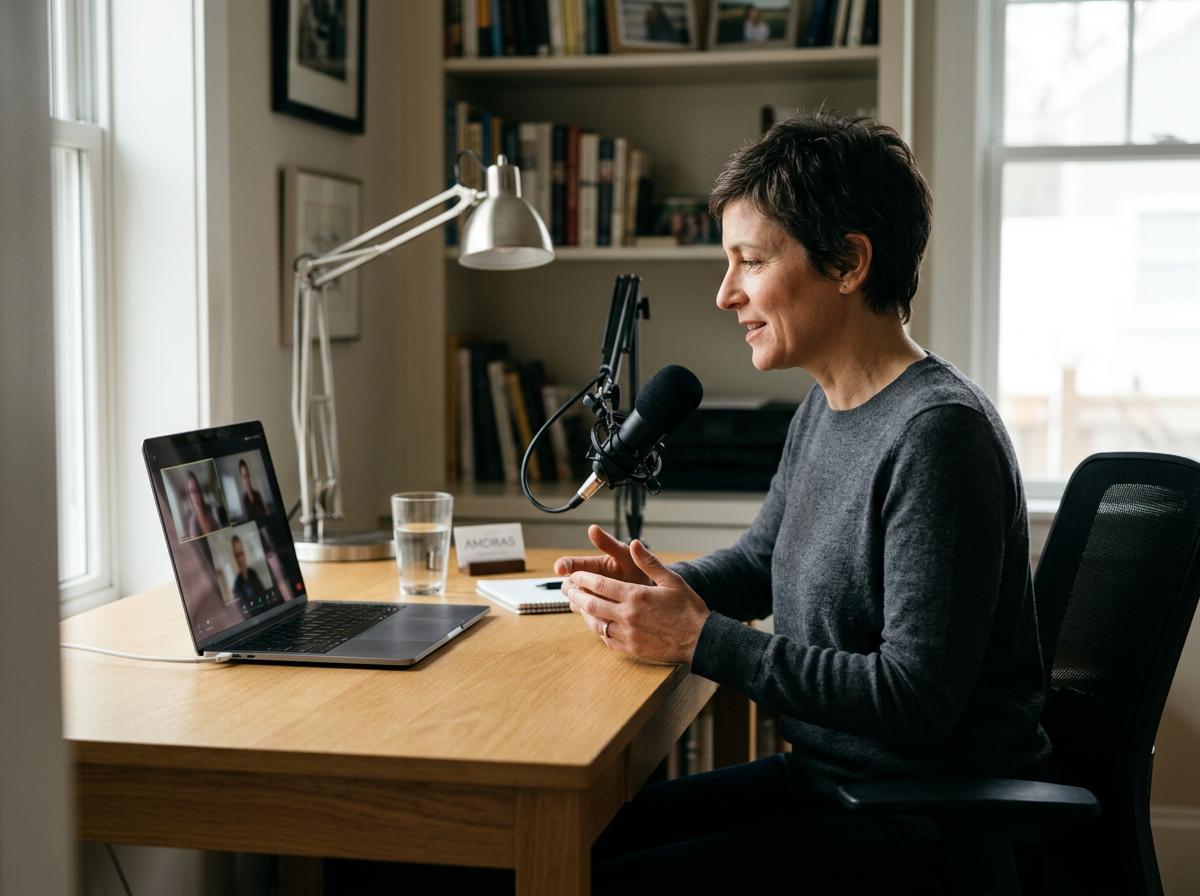
Usually around three hours, online. Everyone is in the same virtual room, but on their own screen, in their own home. The mediator sets the structure, keeps the conversation on the issues, and slows things down when they need slowing down. Where it helps, we can move people into separate private rooms during the session and speak with each side individually.
3. Recording what's been agreed
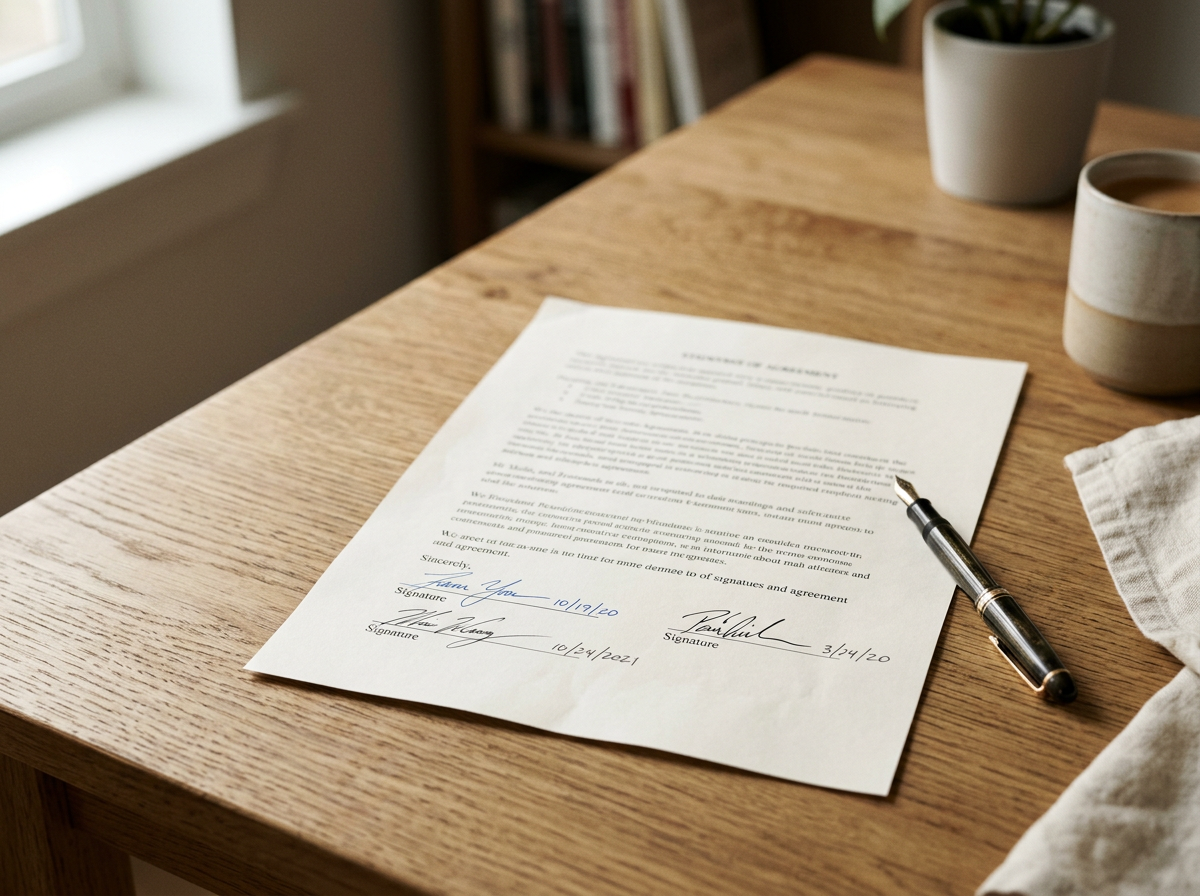
If you reach agreement, we help you write down clearly what you've agreed to, in plain terms, so nothing is left to memory or interpretation. That written record then goes to each party's own solicitor to review and formalise. We don't do that part — and we'll say so honestly rather than let you assume otherwise.
Why doing this online can make it easier, not harder

People assume online is the lesser option for something this serious. In our experience with estate disputes, it's often the better one.
No shared corridor. You don't run into your brother at the lift, or sit three metres from him in a waiting room before you're ready.
You control your own space. Your own chair, your own kitchen, your own cup of tea. A support person in the next room if you want one.
You can leave when it ends. No long drive home replaying it. No parking. No formal building.
Distance stops being the problem. Estate disputes scatter across states — one sibling in Perth, one in Cairns, the house in Melbourne. Everyone can attend from wherever they are.
Cameras can go off. If seeing each other's faces is too much early on, that can be managed.
We run sessions through a secure practice platform integrated with Zoom.
"Am I betraying Mum by fighting about this?"
We hear this a lot, usually quietly, usually near the end of an intake session.
No. Wanting to understand what happened, or wanting your years of caring acknowledged, is not a betrayal of the person who died. Neither is disagreeing with your siblings.
What most people are actually frightened of is that the conflict will become the last chapter — that the family will end here, and that this is what the funeral will have been for.
Mediation exists partly to prevent exactly that. It's a way of dealing with the disagreement in one contained, supported conversation, rather than letting it stretch out over years of silence and letters.
Do you still need a solicitor? Probably yes — and we'll always tell you so
We're going to be straight with you, because this is where people get hurt.
Halo Journey Australia is not a law firm. Our practitioners across all services are made up of AMDRAS accredited mediators, Family Dispute Resolution Practitioners, Counsellors and Psychotherapists. We are not solicitors, barristers or legal advisers.
That means we cannot and will not tell you:
what you are or aren't entitled to from an estate
how succession law or family provision claims work
what a court would be likely to decide
whether there's a time limit that affects you
how an executor should be administering the estate
Those are legal questions, and they matter. Please get independent legal advice from your own solicitor.
Mediation works alongside legal advice, not instead of it. In fact, it usually works best when everyone arrives already knowing where they stand legally — because then the conversation can be about what people actually want, rather than what they've each half-read online.
When there are more than two of you
Estate disputes rarely involve two neat sides. Often there are four siblings, a step-parent, an executor who is also a beneficiary, and someone who isn't speaking to two of the others.
That's workable — it just needs more structure. Each party has their own private intake session, so the intake stage (and the overall cost) scales with the number of people involved. Rather than guess, we'll scope it with you properly before you commit to anything.
Who you'd be working with
Our mediators are AMDRAS accredited under the National Mediator Accreditation System, and work across family, workplace, neighbourhood, community and estate disputes.
Halo Journey Australia is queer-founded and our practice is LGBTQIA+ inclusive and gender-diverse affirming. Chosen families, estranged families, blended families and complicated ones are all understood here. Nobody has to explain or justify who they are to us.
Our work is guided by our T.R.I.B.E. values — Together, Respect, Integrity, Beyond, Empowerment.
Evie

AMDRAS Practitioner
Couples Counselling Specialist
Family Dispute Resolution Practitioner
Evie is a compassionate and down-to-earth AMDRAS Mediator, Family Dispute Resolution Practitioner, and Couples Counsellor, with over a decade of experience supporting couples and families through life’s tougher seasons. With a calm, client-led approach, she creates a space where people feel truly heard, supported, and empowered to move forward with clarity and confidence.
Specialising in both mediation and family counselling, Evie knows that every family is unique. She tailors her approach to fit the individual rhythms and relationships she works with — always with care, respect, and a focus on what truly matters.
Fees
NMAS accredited mediator — $250 per hour, per party
A typical 2-party estate mediation involves two separate private intake sessions (one per party) plus a joint mediation session of approximately three hours. Where more than two parties are involved, the intake structure and total cost scale accordingly — we'll scope this with you in advance so there are no surprises.
Payment is required in full 24 hours before each session, by Stripe or bank transfer
Cancellations with less than 24 hours' notice incur a 50% fee
Non-attendance is charged at the full fee
Flexible payment plans are available where there is genuine financial hardship — please just ask
In general terms, litigation over an estate tends to be slower and more expensive than mediation, and the costs usually come out of the estate itself. We can't tell you what will happen in your situation — nobody honestly can — but for many families a contained process is worth considering before a long one.

Individual intake - 1 hour
$250
Mediation with all parties - 3 hours
$750 per party

Paid up-front Packages:
2- party package (2 × 1hr intakes, 1 × 3hr mediation)
$1800 total
3-party package (3 × 1hr intakes, 1 × 3hr mediation)
$2000
4-party package (4 × 1hr intakes, 1 × 4hr mediation)
$4450
What we do, and what we don't
We do:
Facilitate confidential, impartial mediation of estate and inheritance disputes
Hold private intake sessions with each party
Write up a formal agreement document for all of the parties and co-ordinate signing when agreements are reached
Offer counselling and psychotherapy separately following mediation when required, including grief support
We don't:
Give legal advice, or advise on wills, succession law, family provision claims, executor duties or probate
Tell you what you're entitled to, or what a court would decide
Draft, witness, change or validate wills
Administer estates or act in probate
Decide the outcome or impose one — the mediator has no such power
Guarantee any result. Mediation is voluntary, and sometimes people don't reach agreement
Any agreement reached in mediation should be reviewed by each party's own solicitor before it's formalised.
Frequently Asked Questions
Still have questions? Take a look at the FAQ or reach out anytime. If you’re feeling ready, go ahead and apply.
-
It's a confidential, structured conversation, led by an impartial accredited mediator, in which the people in dispute over a will or a deceased estate work towards their own agreement. The mediator guides the process but doesn't judge, decide or impose anything. It's voluntary, and it's usually far more private than a courtroom.
-
Often, yes. Many contested wills settle by agreement between the parties rather than by a court decision. Contested will mediation gives everyone a structured chance to be heard and to negotiate directly. We can't promise your matter will resolve — that depends on the people in the room — but a great many do.
-
A family provision claim is a legal process, and what it involves — including whether it applies to you and any time limits — is a question for a solicitor, not for us. What we can do is mediate the underlying dispute between family members, whether or not a claim has been made. Get legal advice on the claim itself; bring the conversation to us.
-
We strongly recommend legal advice, and we'd rather say that honestly than pretend otherwise. You need your own independent legal advice so you understand your position before you agree to anything. Our mediators are not lawyers and cannot advise you. Mediation and legal advice work well together.
-
Our AMDRAS accredited mediators are $250 per hour, per party. A standard two-party estate mediation involves two private intake sessions plus a joint session of around three hours. Where more people are involved, the cost scales with the number of intake sessions required — we'll scope it with you upfront. Payment plans are available for genuine hardship.
-
Yes — and this is more common than you'd think. You don't need to be on good terms to mediate. You don't need to make small talk, apologise, or repair the relationship. The private intake sessions exist precisely so the mediator can prepare each of you separately. Plenty of people arrive having not spoken for months.
-
No. All our mediation is online, so you'll be in your own space on your own screen. There's no waiting room and no shared corridor. During the session the mediator can also move people into separate private rooms, and if having cameras on is too much at the start, we can talk about how to manage that.
-
We help parties record clearly what they've agreed, in writing. Whether and how that becomes formally binding is a legal matter — you should have any agreement reviewed by your own solicitor before it's formalised.
-
Disputes where there's no will, or where the fairness of a will is being questioned, are both things we mediate. The legal position in those situations is something to discuss with a solicitor. The family conversation — who feels wronged, what people actually need, and whether an agreement is reachable — is what we're here for.
-
You don't have to commit to anything to make an enquiry. Tell us what's happening and we'll tell you honestly whether mediation is likely to help, what the process would look like for the number of people involved, and what it would cost.
And if what you actually need right now isn't mediation but somewhere to put the grief, we offer counselling and psychotherapy as well — including grief support. Sometimes that comes first, and that's a perfectly reasonable place to start.
Evenings and weekends are available. There are no waitlists.

Language Support, When you need it
At Halo Journey, we want you to feel comfortable, understood, and truly heard — every step of the way.
If English isn’t your preferred language, we’ve got you. Interpreter services are available across all of our sessions to help make things easier, clearer, and more supportive for you. Just let us know when booking, and we’ll organise it for you.
Interpreter services are available at an additional cost.
Send a Halo
Whether you’re ready to book or just want to learn more, we’re only a message away
Email: info@halojourney.com.au
Phone or Text: +61 485 042 221
Monday to Sunday 7 days a week 8:00am - 10:00pm (AEDT)
Supporting Australia-wide, wherever you are