
When Should a Child See a Counsellor? A Parent's Guide
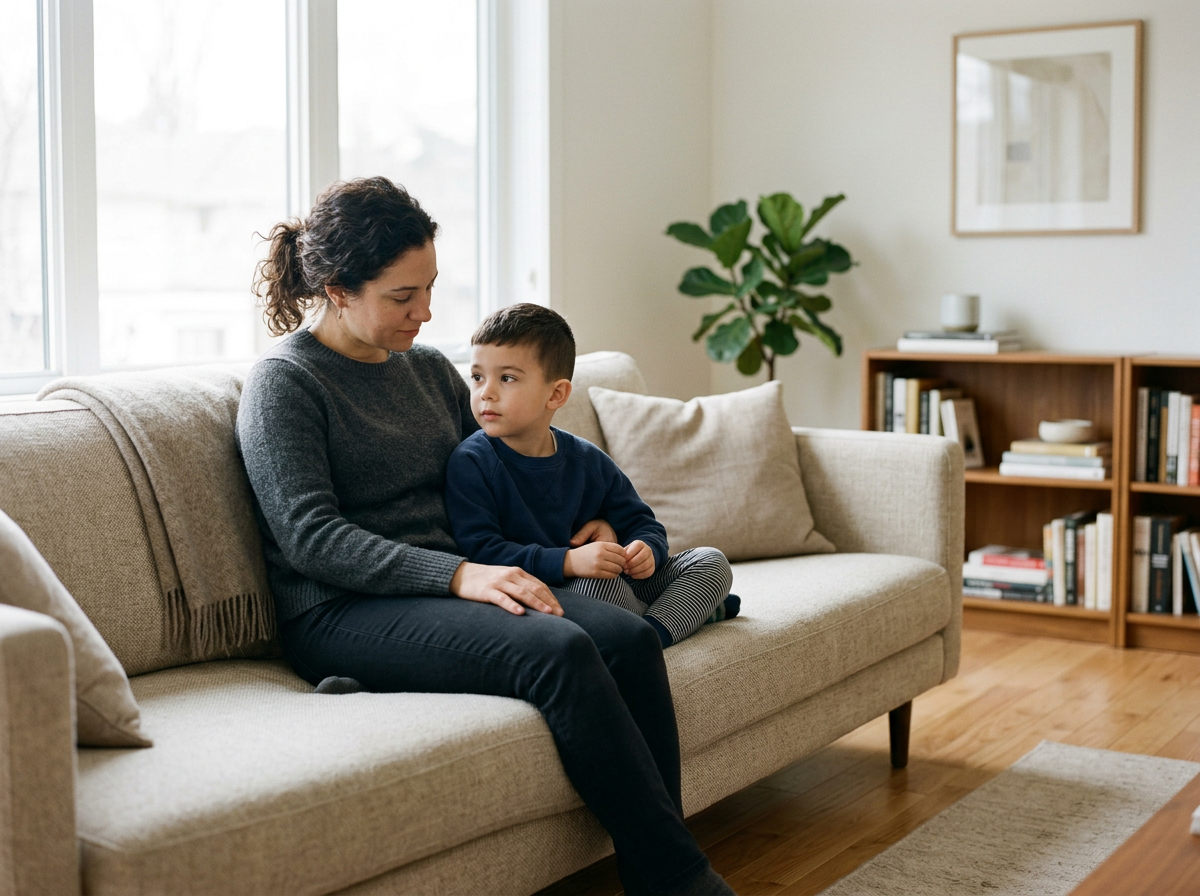
If you're reading this at 11pm with a cold cup of tea and a nagging feeling you can't quite name — you're in the right place. Let's start with the two questions you're probably really asking.
"Am I overreacting?"
No.
You don't need a crisis. You don't need a diagnosis. You don't need a letter from the school or a dramatic incident to point to. Noticing your child is not overreacting — it's parenting.
Here's the thing parents tell us again and again: I felt silly booking. Like I was making a fuss. And then, almost always, a version of: I wish I'd done it sooner.
Child counselling isn't a last resort or an emergency measure. Plenty of children come to us because a parent thought, "something's a bit off lately." That's a completely valid reason.
You know your child better than anyone on earth. If your gut is tapping you on the shoulder, that's information worth acting on. What we offer isn't a correction — it's a second opinion.
"Have I left it too late?"
Also no.
Whether it's been three weeks, three months, or three years since you first noticed something, you haven't missed a window. There is no expiry date on a child feeling more understood than they did last month.
If you've been sitting on this for a while, please don't spend energy on guilt. You were watching, waiting, hoping it would settle — which is exactly what a thoughtful parent does. Now you're doing the next thing. That's enough.
Signs it might be time for child counselling
Children rarely say "I'm struggling." They show it — and what they show looks very different at four than at fourteen.
These are simply observable changes, not a checklist to diagnose anything. Nobody expects you to work out why. Noticing what is more than enough.
Younger children (roughly 5–7)
Going backwards on things they'd mastered — toileting, sleeping alone, baby talk, needing to be carried again
Big, frequent meltdowns that seem to come from nowhere, or take much longer to settle
New fears, or clinginess and separation distress that's ramped up
Nightmares, broken sleep, or suddenly not wanting to sleep in their own room
Tummy aches and headaches with no clear physical cause — very common at this age and easy to miss as distress
Play that's become repetitive, flat, or focused on something frightening
Not wanting to go to kinder or school when they used to be fine
Primary school age (roughly 8–12)
Withdrawing from friends, or friendships suddenly falling apart
School refusal, or a slide in schoolwork and concentration
Being much harder on themselves — "I'm dumb," "everyone hates me," "I ruin everything"
Anger that seems out of proportion, or irritability that's become the default setting
Physical complaints, especially the Sunday-night or before-school tummy ache
Changes in appetite or sleep
Losing interest in things they used to genuinely love
Being unusually secretive, or unusually keen to keep you happy and manage your feelings
Teenagers (roughly 13+)

Pulling away far more than the usual, healthy teenage door-closing
Big shifts in mood, energy, sleep or appetite that stick around
Dropping sport, hobbies, or the friendship group
Risk-taking that feels out of character
Any talk about being a burden, not wanting to be here, or wanting to disappear
Marks or covering up in warm weather
Escalating conflict at home that neither of you can find the exit from
That last one is worth naming. If you and your teen are stuck in the same argument on a loop, sometimes what helps isn't individual counselling but a neutral third person in the room — that's what Parent & Adolescent Mediation is for.
Normal ups and downs vs. worth-a-conversation
Children are meant to have bad weeks. A tricky fortnight after a big change is often just a tricky fortnight. So how do you tell?
Duration. Has it lasted a few days, or has it been weeks? Short-lived wobbles usually resolve on their own. Something that's been quietly running for a month or more is worth attention.
Intensity. Is this a bigger version of your child, or a different one? A shy kid being shy isn't news. A previously chatty kid going silent is.
Interference. This is the most useful one. Is it getting in the way of ordinary life — school, friendships, sleep, family, the things they used to enjoy? Distress that's interfering is distress worth supporting.
If you're ticking two or three of those, that's your answer.
Big life events, even without any "symptoms"
Sometimes children benefit from support simply because something enormous is happening — not because anything's gone wrong. Children often cope beautifully on the outside while carrying a lot on the inside.
Separation or divorce
A death in the family, or the loss of a pet
Moving house, changing schools, or starting high school
A new sibling, or becoming part of a blended family
Illness or injury in the family
Bullying, online or in person
A frightening or unsettling event
If your whole family is feeling the strain of a change, Family Therapy can be a good fit alongside — or instead of — individual work with your child.
What child counselling actually looks like
Let's demystify it, because most parents picture a small child on a large couch being asked how they feel. That's not it.
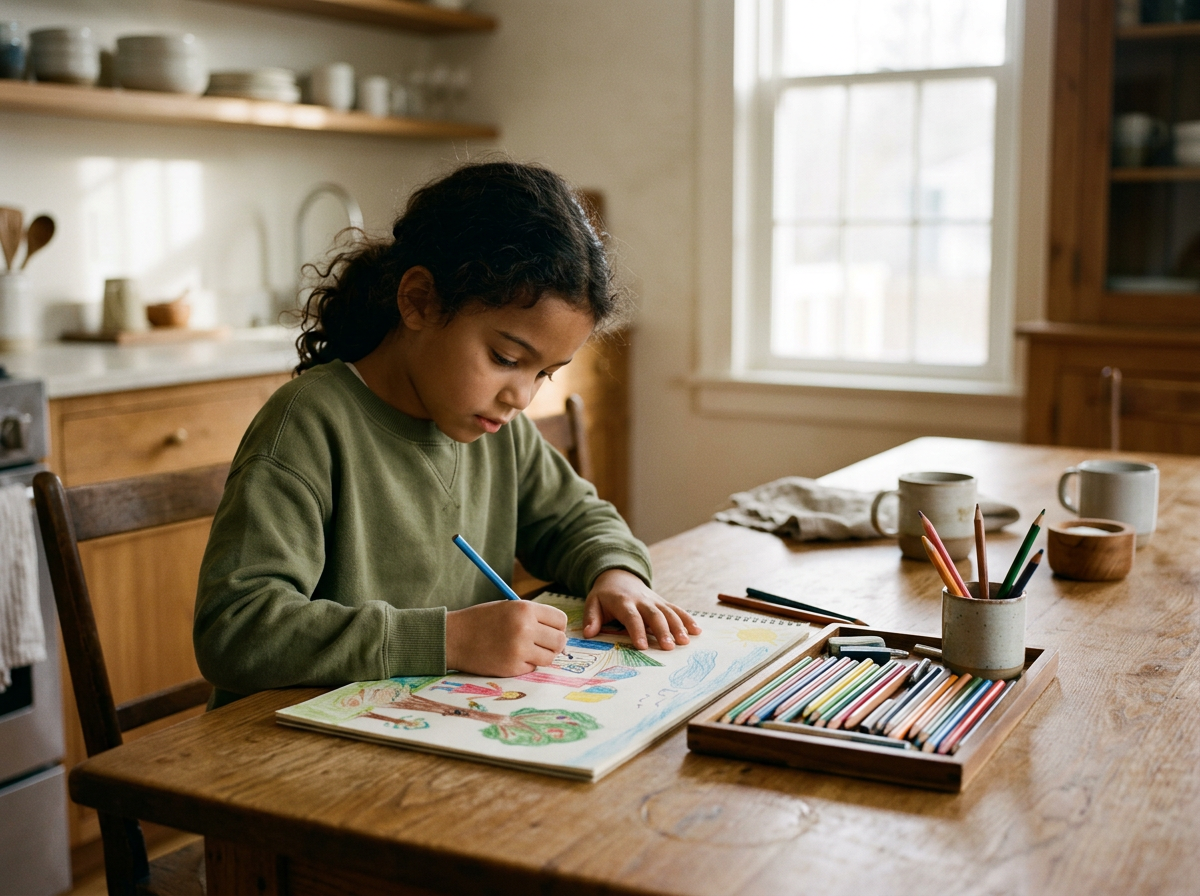
With younger children, the work happens sideways. Through play. Through drawing, painting, making and mess. Through stories and games and talking about something else entirely until the real thing arrives on its own. Our Children's Counselling & Art-based Therapy sessions are built exactly this way — art therapy gives children a way to express things they don't yet have words for.
Two things parents are often surprised by:
Children usually take to it faster than their parents expect. Having one hour a week or a fortnight that belongs entirely to them, with an adult who isn't marking, managing, or worrying about them, is a relief more than a chore.
It is not a report card on your parenting. Nobody is assessing you. A counsellor working with your child is on the same team as you.
Sessions run for one hour, usually weekly or fortnightly. In our experience, families often start to notice shifts across roughly six to eight sessions, though this genuinely varies from child to child.
Things you can do right now, for free
Make space to listen without fixing. Hardest thing on this list. When a child says something raw, the instinct is to reassure it away. Try "that sounds really hard, tell me more" and then sit in the silence a beat longer than feels comfortable. Side-by-side helps — in the car, walking the dog, doing dishes. Less eye contact, more talking.
Notice patterns, not just moments. Jot down when things spike. Sunday nights? After screen time? After contact with a particular person? Patterns are gold.
Talk to their teacher.Teachers see a version of your child you never do. A quick email asking "how are they going socially?" often fills in a missing piece.
Keep routines boringly consistent. Meals, bedtime, wake-up. When a child's inner world feels wobbly, a predictable outer world does real work.
Look after yourself too. Parenting a struggling child is genuinely depleting. If you need your own space to process it, Counselling & Psychotherapy for adults is there.
When to act urgently
Please take this seriously and calmly.
If your child talks about a plan they intend to act on to take their own life, is hurting themselves, or you believe they are in immediate danger — call 000.
Outside of immediate danger, book with your GP promptly. Don't wait for a counselling appointment to become available, and don't wait to be certain. Bring what you've noticed, including the small things.
Asking a child directly whether they've thought about hurting themselves does not plant the idea. It's a hard question to ask and often a relief to be asked.
Where counselling fits — and where a GP comes first
Our practitioners are counsellors and psychotherapists, not doctors, psychologists or paediatricians. We provide therapeutic support: a relationship, a space, and skilled work over time.
If what you need is a diagnosis, a formal assessment, or a mental health care plan, your GP is the first stop.
The two run happily side by side. Many of our families are seeing a GP and/or a child-psychiatrist and doing counselling at the same time, and that's often a really strong combination.
If you'd like to talk it through
No waitlists. If you've been quoted a wait measured in months elsewhere, you don't need to wait here - we’ll get you within 48 hours.
7 days a week, 6am to 10pm — including evenings and weekends, so you're not pulling your child out of class.
Four accredited practitioners who work specifically with 5-17 year olds, registered with PACFA, ACA or equivalent, all holding Working with Children Checks, fully insured, with ongoing supervision.
Art-based therapy for children and young people — a genuine rarity online.
LGBTQIA+ inclusive and gender-diverse affirming, queer-founded, and experienced with neurodivergent young people.
Fully online. No car park, no waiting room, no travel. Your child stays in their own familiar space — which, for a lot of kids, is precisely why they open up.
You can read more and book at Children's Counselling & Art Therapy. Or if you'd rather just talk it over with a human first, get in touch — that's a completely normal place to start.
You noticed something. That was the hard part.
