
Signs It’s Time for Couples Therapy (and Why Online Makes It Easier)
If you found this post, it probably wasn't because you Googled "is my relationship okay." You already know something isn't. Maybe it's been weeks of it. Maybe it's been years. Either way, that awareness — that quiet or not-so-quiet sense that something needs to change — is exactly the right place to start.
Couples therapy online doesn't require a crisis to qualify. In our experience, the couples who do best are the ones who come before things have completely unravelled — before one or both of them has already quietly decided. Most couples wait far longer than they should. If you're reading this, you're ahead of that curve.
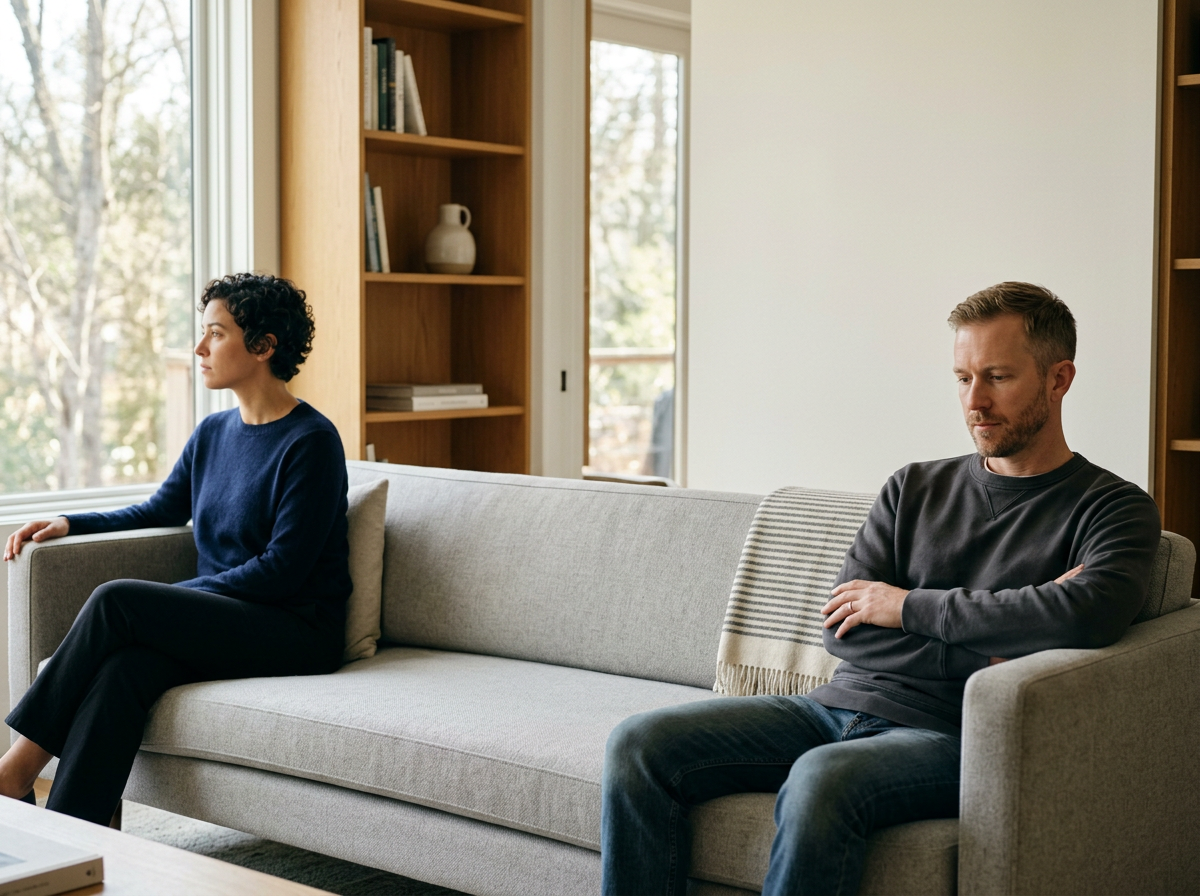
One more thing before we get into it: not every couple comes to therapy with a goal of staying together. Some come to figure out whether they want to. That's a completely valid reason to book a session, and it's one we hold without judgement.
Here are five signs it's time.
1. You Have the Same Argument on Repeat — and It Never Resolves
It doesn't matter what it's technically about. The dishes. The finances. How you parent. Who carries what. If the same fight keeps coming back — if you both know exactly how it will go, and you're still doing it anyway — the surface issue isn't the real one.
The recurring argument is a symptom. Underneath it, something hasn't been named. It might be about feeling unseen, about a need that isn't being met, about something that happened a while back that never properly landed. Couples therapy helps you find what's actually there — not to assign blame, but to give you both something real to work with, instead of the same script on repeat.
2. One or Both of You Has Gone Quiet
Not the good kind of quiet. Not peace. The "there's no point bringing this up" quiet. The "I don't want to start something" quiet. The scrolling-in-bed-with-nothing-left-to-say quiet.
Conflict avoidance tends to look like progress from the outside — fewer arguments, less drama. But when one or both of you has stopped bringing things up because you've stopped believing it'll help, the relationship is running on a deficit nobody is naming.
In our experience, this kind of withdrawal is often more worrying than open conflict. Conflict means both people still care enough to try. Silence can mean someone is already leaving — emotionally, if not yet in any other way.
3. You Feel More Like Housemates or Co-Parents Than Partners
The logistics work fine. Dinner gets made. The school drop-offs happen. The bills are paid. You might even be pretty good at being a team. But somewhere along the way, the warmth got replaced by coordination. There's no play. No real intimacy — emotional or physical. No sense that you're choosing each other, not just managing things together.
Couples get here gradually, and they often don't notice until they're sitting with us and someone says "I can't actually remember when we last really laughed together." That moment of realisation is, strangely, a good one. It means there's something to find again.
This is one of the most common things couples bring to couples counselling — and one of the most moveable.
4. Something Happened That Broke Trust
Infidelity, yes. But trust breaks in a lot of ways. A financial betrayal. A lie that turned out to matter more than you expected. A secret discovered. A line crossed that can't be uncrossed.
What we see most often isn't couples arriving raw, mid-crisis. It's couples coming in six months, twelve months, sometimes longer after the event — when it's technically been "dealt with" but the relationship hasn't healed. When the person who was hurt finds it surfacing again and again, and the person who caused the harm is still carrying the weight of it, and neither of you knows how to actually move forward.
Relationship counselling online isn't a magic fix. But it gives you a place to do the work — with someone who isn't going to flinch, take sides, or make either of you feel worse for still being in it.
5. You Love Each Other But Can't Seem to Reach Each Other Anymore
No villain. No dramatic event. Just — drift.
Different schedules, different rhythms, parallel lives running alongside each other without quite touching. You're both aware of the gap. Neither of you knows how to close it, and the longer it goes, the harder it feels to even raise.
This one gets minimised a lot. At least we don't fight. But quiet erosion is still erosion. In our experience, the couples who come to us with this one are often surprised by how quickly things shift — not because there's a magic conversation, but because both people still care. They just needed somewhere to say it out loud.
What Couples Counselling at Halo Journey Actually Looks Like
At Halo Journey Australia, couples counselling runs for 90 minutes for each session with both of you. Sessions take place via our secure online client platform. No travel required. No waiting rooms.
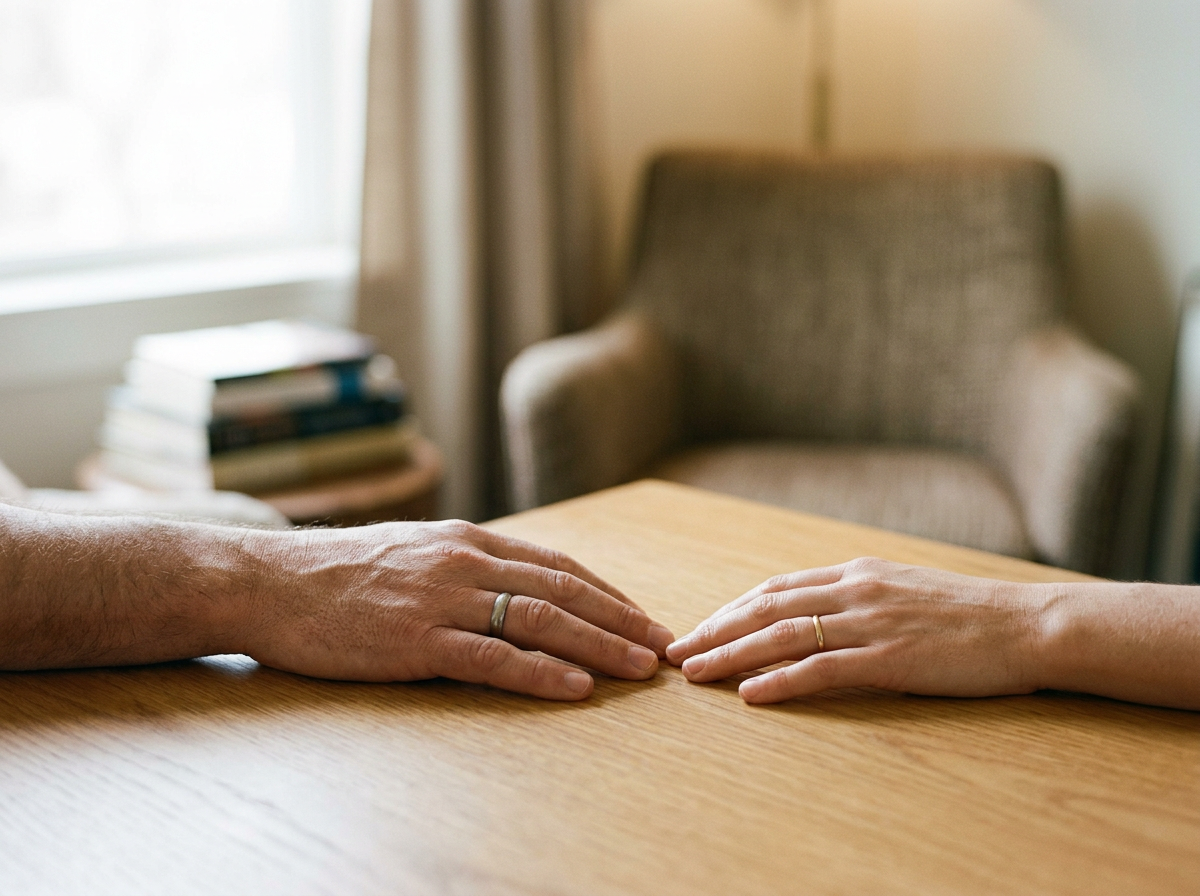
Our practitioners are qualified counsellors and psychotherapists registered with PACFA, ACA, or equivalent professional bodies. We specialise in communication, conflict, LGBTQIA+ relationships, as well as intimacy and sexual issues.
For some couples, the work also includes individual sessions running alongside the couples sessions — a space for each person to process things separately, without the other person in the room. If that feels relevant, it's worth asking your practitioner about.
All relationship shapes are welcome here: LGBTQIA+ couples, non-monogamous partnerships, queer relationships of every kind. Halo Journey is queer-founded, and inclusive care is built into how we work — not something we've added on.
If your relationship also involves navigating complex family dynamics, we offer Family Therapy as a separate pathway worth knowing about.
Why Online Makes It Easier
There's no scheduling argument on the way to the appointment. For couples with children, shift work, or long commutes, getting to a physical location is its own source of tension. Online removes that layer before the session even begins.
Nobody sees you arrive. If you're not ready to tell people you're in therapy — entirely reasonable — being seen walking into a shared building matters. From home, you're invisible.
Each of you is in your own physical space. Online means each person is in a position of slight comfort before the work begins. Side by side in a waiting room doesn't always set the right temperature. The beauty of being online also means that if one of you works FIFO - that’s ok too - you don’t even need to be in the same state at the same time to attend a session.
Evenings and weekends are genuinely available.At Halo Journey, we run 7 days a week, 6am–10pm. Most couples can't easily negotiate who takes time off work for a daytime session — that negotiation introduces resentment before the session starts. Evenings and weekends are real options here.
The drive home is yours alone. After a session that's brought up something difficult, sharing a car is a lot. With online sessions, each person gets to decompress privately before you're in the same space again. Practitioners notice this — it matters more than it sounds.
If you recognise yourself in any of the above, take a look at our Couples Counselling page for more on how it works and how to book. No waitlists — available 7 days, including evenings and weekends.
If individual support feels relevant alongside the couples work, our Counselling and Psychotherapy page has more information.
Frequently Asked Questions
Is couples therapy worth it? In our experience, yes — when both people are willing to engage honestly, relationship counselling can shift dynamics that have felt stuck for a long time. The aim isn't to "win" the conversation. It's to understand what's actually going on, and to have a different kind of conversation than the ones you've been having at home.
How long does couples therapy take? There's no single answer, and we'd be cautious of anyone who gives you one with confidence. Some couples find 6–8 sessions creates a meaningful shift; others work through things over a longer period. A lot depends on what you're working through and how long certain patterns have been in place.

What if my partner won't come?More common than you'd think. If your partner isn't ready, individual sessions can still be genuinely useful — you can explore your own patterns, clarify what you want, and sometimes a shift in one person changes the dynamic enough that the other becomes more open. Find out more about individual counselling and psychotherapy here.
Do you do couples therapy online? Yes — all of our sessions, including couples counselling, are conducted via our online secure platform. We're available Australia-wide: Sydney, Melbourne, Perth, regional towns, anywhere with a reliable internet connection. No travel required.
Is what we say confidential? Yes. Confidentiality is a professional and ethical requirement for all of our registered practitioners. There are a small number of legal exceptions — situations involving serious risk to safety — which your practitioner will explain clearly in your first session. Beyond those, what's said in the room stays there.
Halo Journey Australia is a fully online counselling, psychotherapy and wellness practice. Our practitioners are qualified counsellors and psychotherapists registered with PACFA, ACA, or equivalent professional bodies. We are not a crisis or emergency service. If you are in immediate danger, please contact emergency services on 000.
